Cookie consent
We use cookies. They help us to understand your interactions with the website.
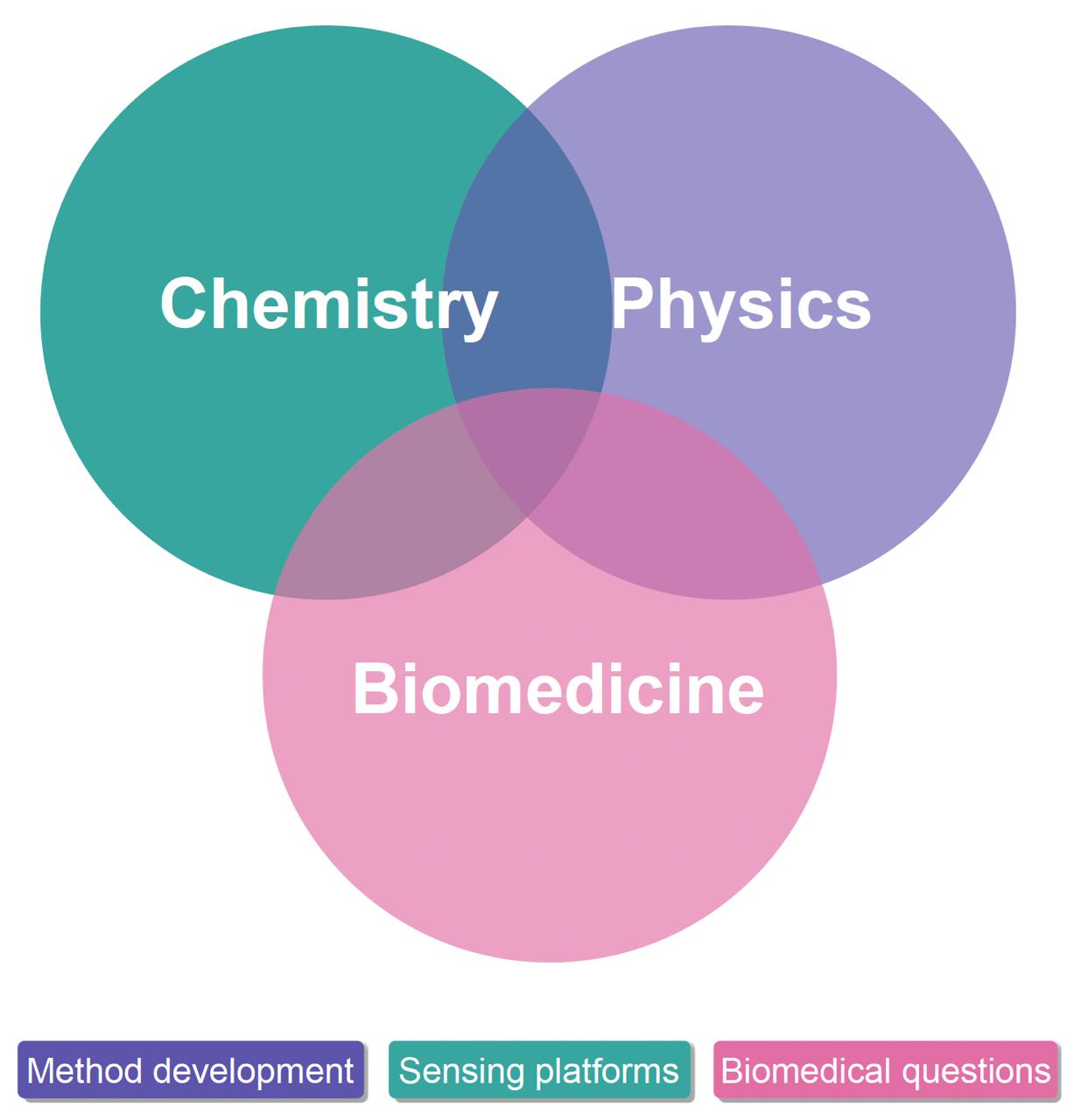
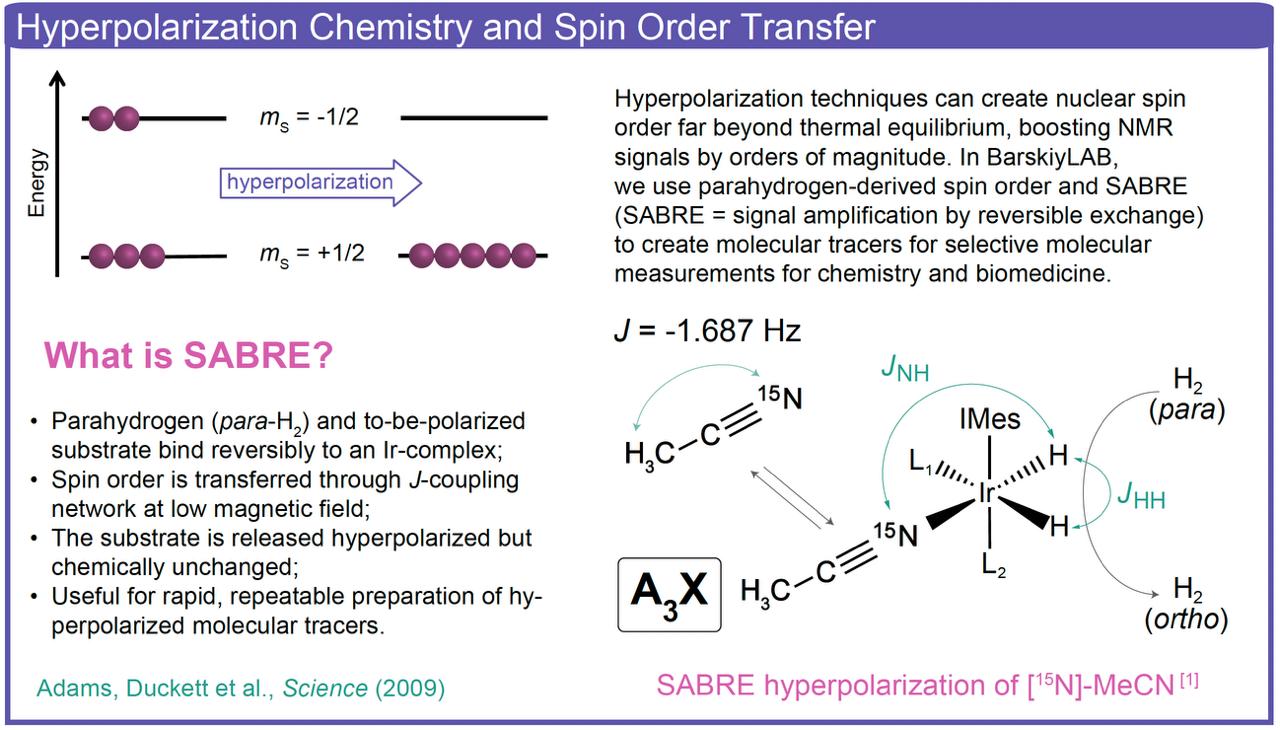
We develop hyperpolarization chemistry and quantum measurement methods that turn spins into sensitive probes of chemistry, biology, and fundamental physics.
Spins are extraordinary probes of molecular structure and dynamics, but their weak thermal polarization normally limits sensitivity. Our lab develops chemical and physical strategies that overcome this limitation by combining parahydrogen hyperpolarization, organometallic catalysis, optical pumping, zero- to ultralow-field (ZULF) NMR, and quantum magnetometry.
We are especially interested in molecules that do more than passively report their spectra. In our experiments, hyperpolarized molecules can act as spin amplifiers, self-sustained J-oscillators, and real-time reporters of chemical and biological transformations. This creates a bridge between physical chemistry, quantum sensing, catalysis, and biomedical magnetic resonance.
One of the central goals of our lab is to make molecular spins (nuclei and electrons) an active magnetic medium rather than passive reporters. Hyperpolarization prepares dense ensembles of spins far from thermal equilibrium; when these spins respond to a weak magnetic field, their own magnetization can generate an additional field that amplifies the signal [1].
Hyperpolarized molecular spins can produce magnetic amplification in both linear and nonlinear regimes (for example, under active feedback), extending amplification to coupled multi-spin systems and motivating new approaches to quantum sensing and magnetometry.
Zero-field NMR usually produces transient signals. We have developed a different mode of spectroscopy: quantum J-oscillators, where spin-spin couplings provide molecular fingerprints and programmable feedback sustains coherent oscillations.
In our 2026 Nature Communications work [2], J-oscillators used molecular J-couplings to produce phase-coherent continuous oscillations at sub-hertz to tens-of-hertz frequencies. In [15N]-acetonitrile, the oscillator achieved a 340 μ Hz linewidth over 3600 seconds, more than two orders of magnitude narrower than conventional zero-field NMR under comparable conditions.
This turns zero-field NMR into a platform for precision molecular spectroscopy and nonlinear spin dynamics. By adjusting feedback phase and gain, we can selectively amplify different J-transitions, perform on-demand spectral editing, and explore dynamical regimes that connect magnetic resonance with the physics of lasers, masers, limit cycles, and self-oscillating quantum systems.
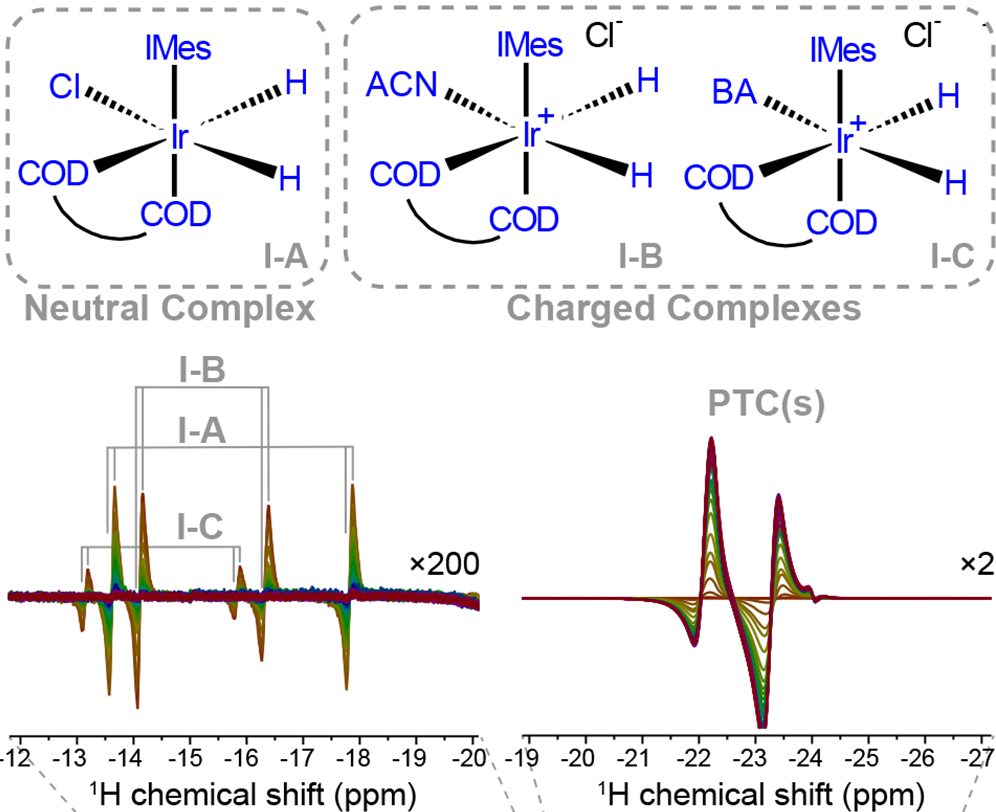
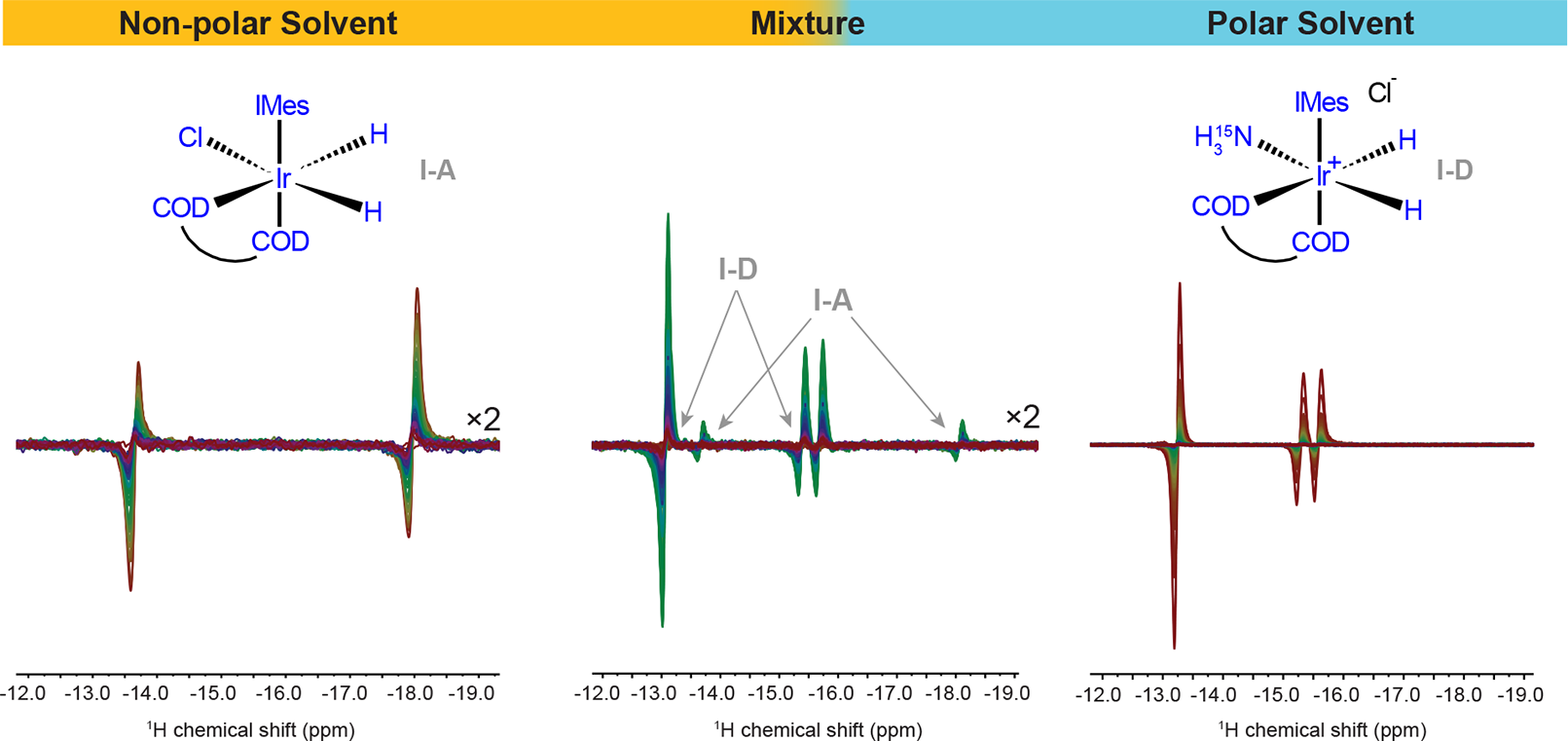
Parahydrogen-based hyperpolarization begins with chemistry. PHIP and SABRE rely on organometallic catalysts that convert the hidden spin order of parahydrogen into observable nuclear spin polarization. Understanding these catalysts — their activation pathways, hydride intermediates, ligand exchange, solvent effects, and long-term stability — is therefore central to building reliable hyperpolarized NMR and quantum-sensing experiments [3].
Our goal is to turn mechanistic understanding of catalytic hydrogenations into rational design: which catalyst, ligand, solvent, exchange regime, and magnetic-field control sequence will produce the right spin order for a given molecule and experiment?
Many important molecules do not bind directly to SABRE catalysts. Relayed hyperpolarization expands the molecular scope by passing spin order through exchangeable protons and then to heteronuclei such as 13C and 15N [4-5]. This gives access to metabolites, small biomolecules, and chemical reaction networks that would otherwise be difficult to observe with high sensitivity.
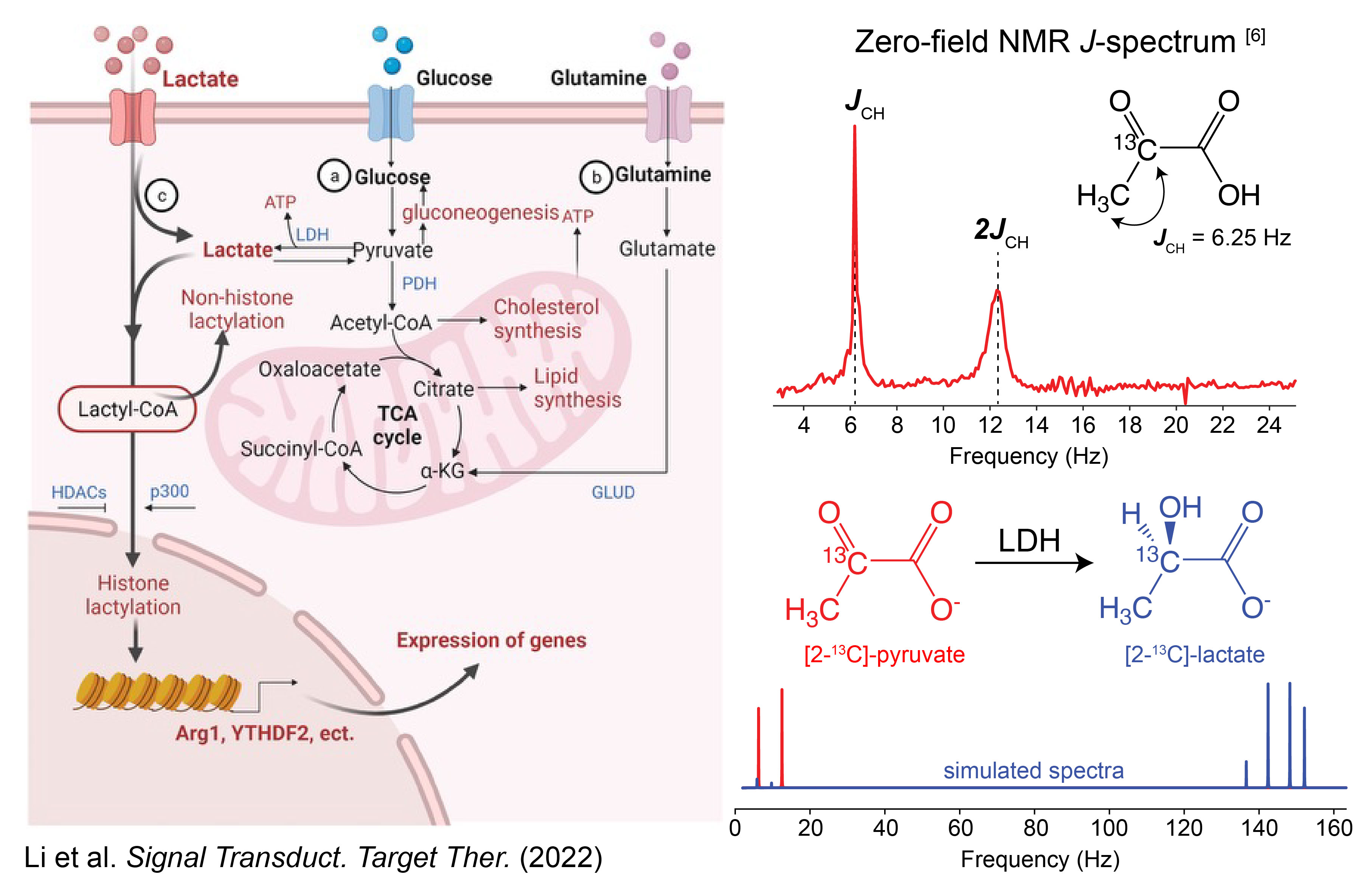
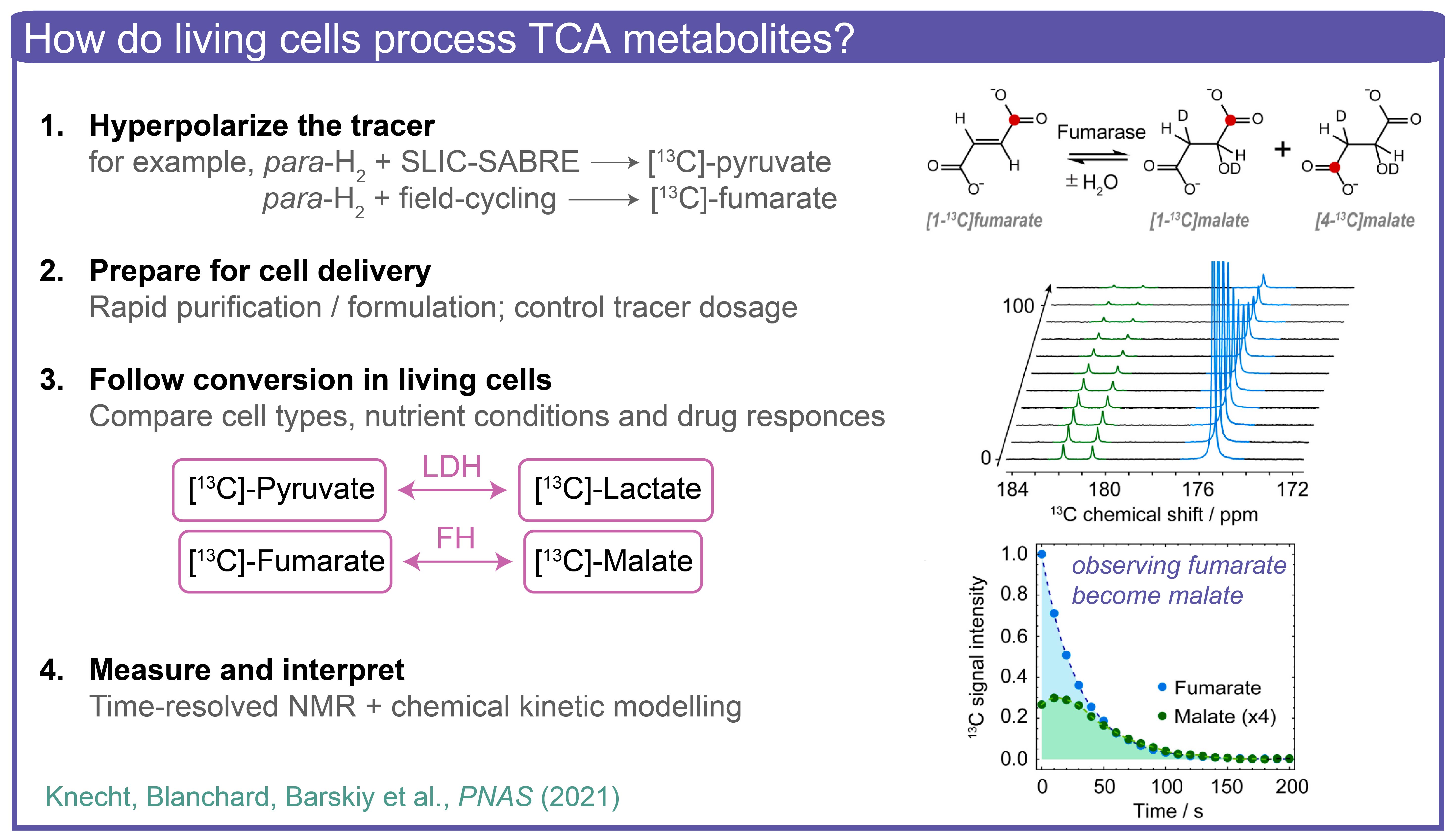
How do living cells process nutrients - and how does that chemistry change under stress or drug treatment? We are developing hyperpolarized magnetic resonance methods, including benchtop and ZULF NMR [6], to follow molecular transformations in real time, connecting physical chemistry and quantum sensing with questions in cell biology.
Parahydrogen-based hyperpolarization technique SLIC-SABRE can be used to generate strong carbon-13 signals from pyruvate, including at low tracer concentrations. After preparing the hyperpolarized tracer for delivery to cultured live cells, we will follow its conversion into lactate. By comparing cell types, nutrient conditions, and responses to drugs, we aim to understand how cellular metabolism adapts - and how sensitively those changes can be detected.
This direction builds on our contributions to hyperpolarized fumarate production, purification, and enzymatic conversion, in vivo carbon-13 spectroscopy at low magnetic field [7], and hyperpolarized molecular probes for pH sensing [8]. We are bringing these capabilities together through tracer chemistry, rapid sample delivery, magnetic-resonance instrumentation, and kinetic modeling. Our long-term goal is to make real-time metabolic sensing and imaging accessible with compact, low-field instruments.
Our work sits at the boundary of chemistry, physics, engineering, computation, and biology. Students may synthesize catalysts, build hyperpolarization and low-field NMR hardware, simulate spin dynamics, analyze real-time spectra, or develop biological assays. We are looking for curious people who want to learn across disciplines and build new magnetic-resonance tools from the molecules up.
We use cookies. They help us to understand your interactions with the website.